ALIAS Texas, a year in review
By Liam Larkin
On February 5th, 2022, anyone closely observing the UH-60A Black Hawk flying over Fort Campbell, Kentucky would have noticed something strange: the pilot and co-pilot seats sat empty. Yet, despite the lack of a crew, the collective moved on its own as the multi-ton helicopter navigated a simulated version of New York City’s skyline with the precision of an experienced aviator. What they were seeing was the first completely unmanned flight of the Aircrew Labor In-Cockpit Automation System (ALIAS) program.
The culmination of a six-year partnership between the Defense Advanced Research Projects Agency (better known as DARPA) and helicopter manufacturer Sikorsky, the flight displayed the maturity of the ALIAS program and the Sikorsky-developed MATRIX technology that powered it. The core of the ALIAS program, MATRIX, is an optionally piloted vehicle (OPV) technology that automates the entire flight regime, from preflight and takeoff, to landing and shutdown.
Today, more than four years after this historic first, just a few miles away from Texas A&M University at the George H.W. Bush Combat Development Complex (BCDC), this technology is being re-engineered for a different kind of war: fighting wildland range fires that threaten millions of acres across Texas & the American West every year. The stakes could not be higher. In recent years, catastrophic blazes like the 2024 Smokehouse Creek Fire, which scorched over one million acres to become the largest wildfire in Texas history—have proven that traditional suppression methods are being pushed to their absolute limits. Across the state of Texas, wildland fires have swallowed over 2.3 million acres between 2021 and 2024, costing billions in damages and putting an unsustainable strain on human crews who face extreme perils from smoke inhalation, unpredictable wind shifts, and fatal terrain traps.
Program Awarding – Why the Texas A&M System and BCDC were selected, what makes us unique
Located on the Texas A&M University System’s RELLIS Campus, the BCDC conducts research, development, testing, and evaluation of critical national security technologies alongside world-class researchers and partners. By utilizing its state-of-the-art laboratory and testing facilities, the complex operates with an agile mindset to accelerate the integration and transfer of technology, delivering advanced defense and security capabilities for the nation.
Crucial to this capability is the BCDC’s Innovation Proving Ground (IPG) at the RELLIS Campus—a world-class, highly secure testing ecosystem designed specifically to bridge the gap between laboratory prototypes and real-world operational environments. Featuring highly instrumented ranges, complex physical test beds, and dedicated airspaces, the IPG allows engineers to put autonomous systems through grueling, high-frequency trial environments that cannot be found anywhere else.
With these capabilities in mind, DARPA partnered with the BCDC and the Texas A&M University System in summer 2025 to apply ALIAS technology to wildland fires. This newly forged initiative was officially designated as the ALIAS Texas program. Backed by $59.8 million in Texas Legislature appropriations for FY26–27, the ALIAS Texas team began by framing the core challenge: what does it take to develop autonomous rotary-wing wildland firefighting capabilities that are safe, dependable, and effective? Their answer stood on three core tenants; begin with mature proven technology, test early and often, and partner with stakeholders, state & national disaster response experts, and the wider community.
Multiple Technologies Coming Together
By leveraging the foundational technology developed by DARPA and Sikorsky under the broader ALIAS initiative, the ALIAS Texas program steps onto a mature, battle-tested launchpad. However, while MATRIX technology provides the essential capability of autonomous flight, autonomy alone is not enough to combat a complex, fast-moving wildland fire. To transform a standard aircraft into an effective firefighting asset, the system must be rigorously engineered to conquer a unique set of atmospheric and operational hazards:
● The Smoke Barrier: Operating flawlessly in severely degraded visual environments choked by heavy smoke, ash, and thermal distortion.
● Night Operations: Executing high-risk, low-altitude suppression missions after dusk, a time when human crews are traditionally grounded due to unacceptable risk.
● Congested, Unmanaged Airspace: Safely navigating crowded air corridors alongside unpredictable civilian drones, spotter planes, and traditional helicopters.
● Dynamic Environments: Adapting in real time to shifting wind profiles, sudden extreme heat plumes, and rapidly expanding fire perimeters across massive geographic footprints.
Working with Partners – Identifying Needs and Solving Problems
At its core, the ALIAS Texas initiative is a masterclass in cross-agency collaboration. Rather than engineering in isolation, the team has anchored the program within a vast, nationwide ecosystem of operational and technological partners.
To ensure the system meets the grueling demands of real-world emergencies, the BCDC coordinates directly across three distinct sectors:
● Federal & Aerospace Integration: Elite innovators like DARPA and NASA, and the aviation pioneers at Sikorsky provide the foundational autonomous technology, high-level program development, and engineering support.
● Texas State Agencies: Operational partners, including the Texas Parks and Wildlife Department, the Texas Military Department, the Texas Department of Public Safety, and the Texas Department of Emergency Management, help to actively define the system’s required capabilities while embedding critical resources into the pipeline.
● The Texas A&M University System: Leveraging the unparalleled internal expertise of the university system, the team works hand-in-hand with the Texas A&M Forest Service, Texas A&M Task Force 1, the Texas A&M Engineering Extension Service (TEEX), and the Texas A&M Engineering Experiment Station (TEES). Specialized support from the Autonomy Research Institute at Texas A&M-Corpus Christi provides drone autonomy insight, while the Center for Applied Communication and Information Systems works to construct seamless data networking.
5 Tasks of Firefighting
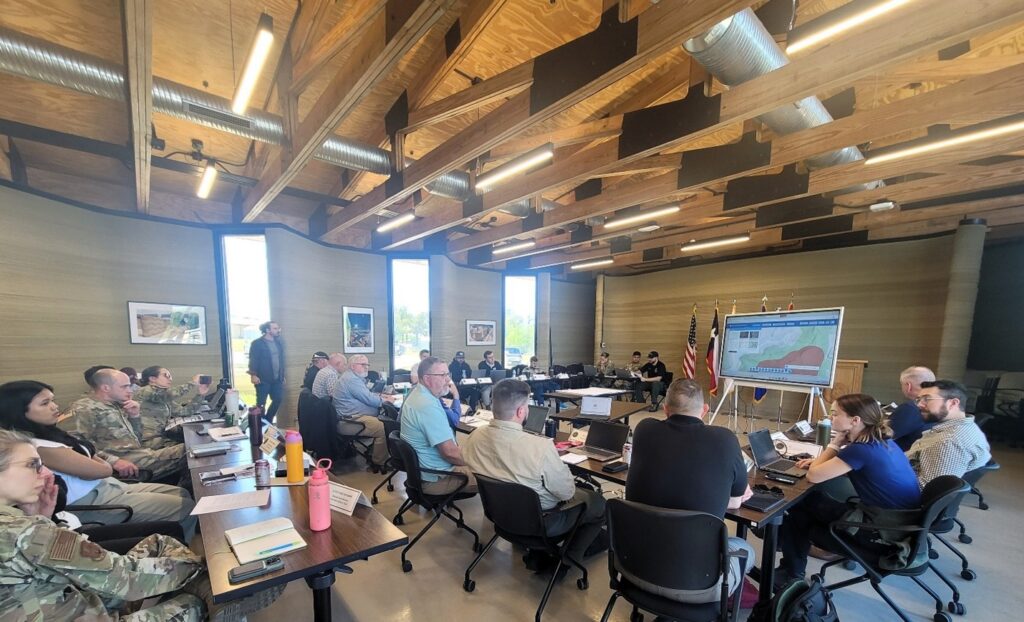
Gaining insight from its many operational partners, the ALIAS Texas team has identified five core mission capabilities the final system must execute autonomously:
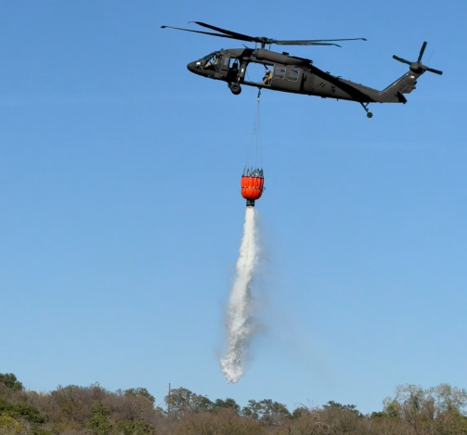
● Water Drops: Automatically loading, transporting, and precision-dropping of water or suppressant directly onto active fires.
● Sling Load Logistics: Transporting critical equipment and supplies externally via a sling-load system to and from logistics hubs, remote, and cut-off areas.
● Personnel Shuttling: Safely ferrying crews and firefighters between staging areas, rally points, and active fire perimeters.
● Casualty Evacuation (CASEVAC): Rapidly evacuating injured personnel and civilian fire victims out of hazardous areas.
● Aerial Reconnaissance: Providing real-time, continuous intelligence, surveillance, and mapping of the fire front and surrounding terrain.
System of Systems Approach
With these interconnected challenges in mind, the ALIAS Texas team at the BCDC determined from the outset that the final product could not exist in a vacuum; it had to be engineered as a unified “system of systems.” While the MATRIX-driven optionally piloted Black Hawk serves as the flagship asset of the program, it represents just one component of a much larger, interconnected network. To fully orchestrate a modern wildfire response, the BCDC is integrating a suite of supporting technologies. This broader ecosystem includes a long-loiter UAV for continuous overhead fire surveillance, integrated aircraft-incident management software to synchronize air-to-ground operations, a dedicated mobile command vehicle, predictive fire-modeling software, and robust, redundant communication networks, just to name a few.
Testing
Translating these complex software frameworks into a rugged, reliable operational system meant that every theoretical concept must be aggressively evaluated. To preempt technical bottlenecks and maintain aggressive development momentum, the ALIAS Texas team committed to a strategy of early, high-frequency field evaluation. Over the past ten months alone, the team has deployed into the field multiple times to rigorously evaluate various components of the program and gain experience from real-word exercises.
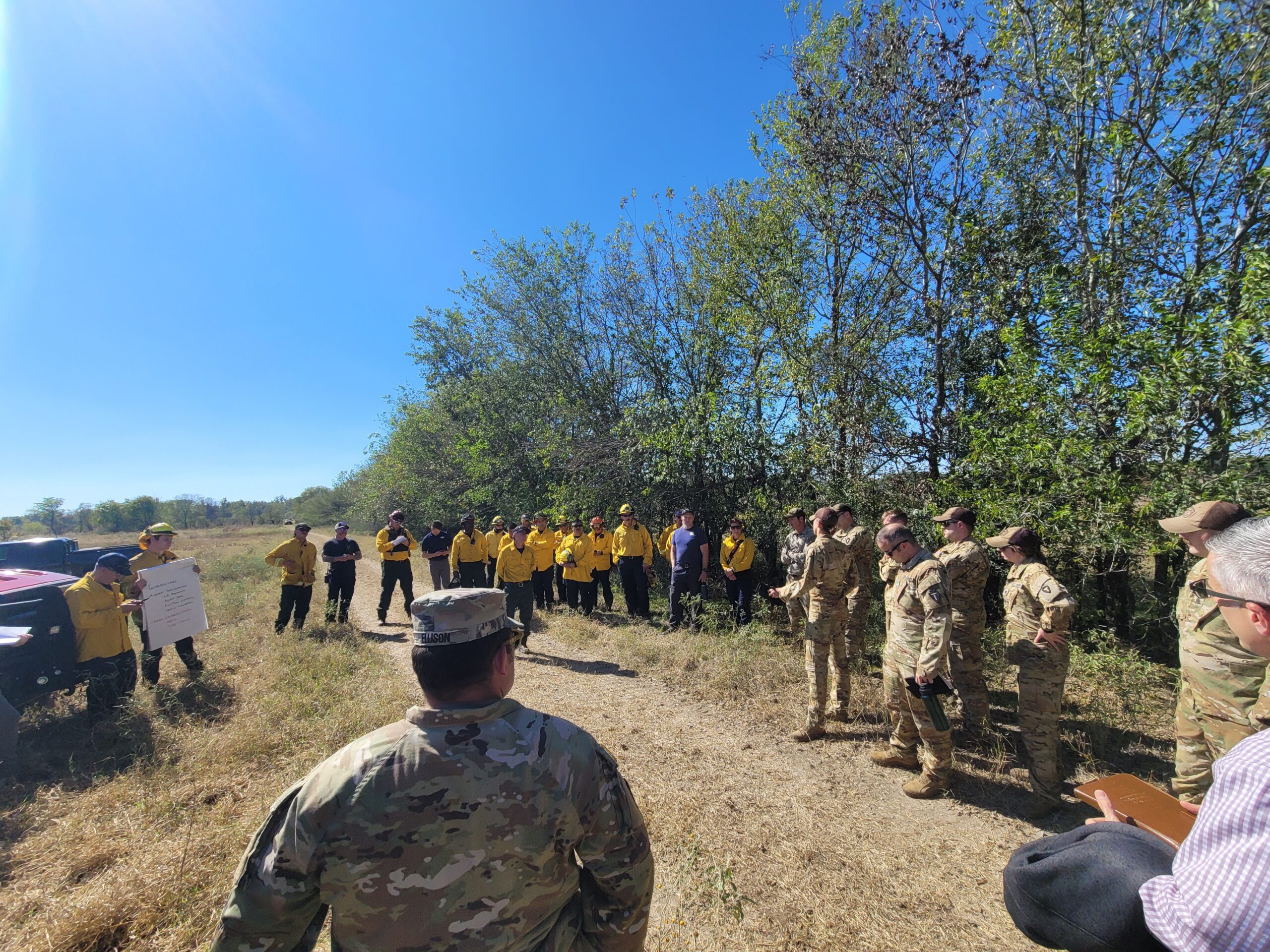
Working with the Austin Fire Department’s Wildfire division and the Texas Military department, the ALIAS Texas team took part in the inaugural FireFest ‘26 exercise. Getting the opportunity to evaluate initial prototypes of BCDC-developed air and ground fire attack applications and garner experience from tabletop exercises. In May, the ALIAS Texas team participated in the TEEX led Search and Rescue Exercise (SAREX) to collaborate with partner agencies on air-ground cooperation.
Army Interest
Speaking at the Reagan National Defense Forum about a shifting vision for the nation’s defense plan, War Secretary Pete Hegseth emphasized that the military must adapt to a new era of conflict. “Autonomy is… a huge part of the way of the future,” Hegseth noted, signaling a sweeping Pentagon push toward autonomous systems and rapid technology deployment, as detailed by GovCIO Media & Research. Today, that high-level strategy is rapidly translating into institutional reality. Following the Pentagon’s announced plans to establish a sub-unified command for autonomous warfare, the Senate Armed Services Committee advanced provisions in the National Defense Authorization Act to permit a standalone, four-star Robotic and Autonomous Systems Combatant Command, according to a report by Defense One.
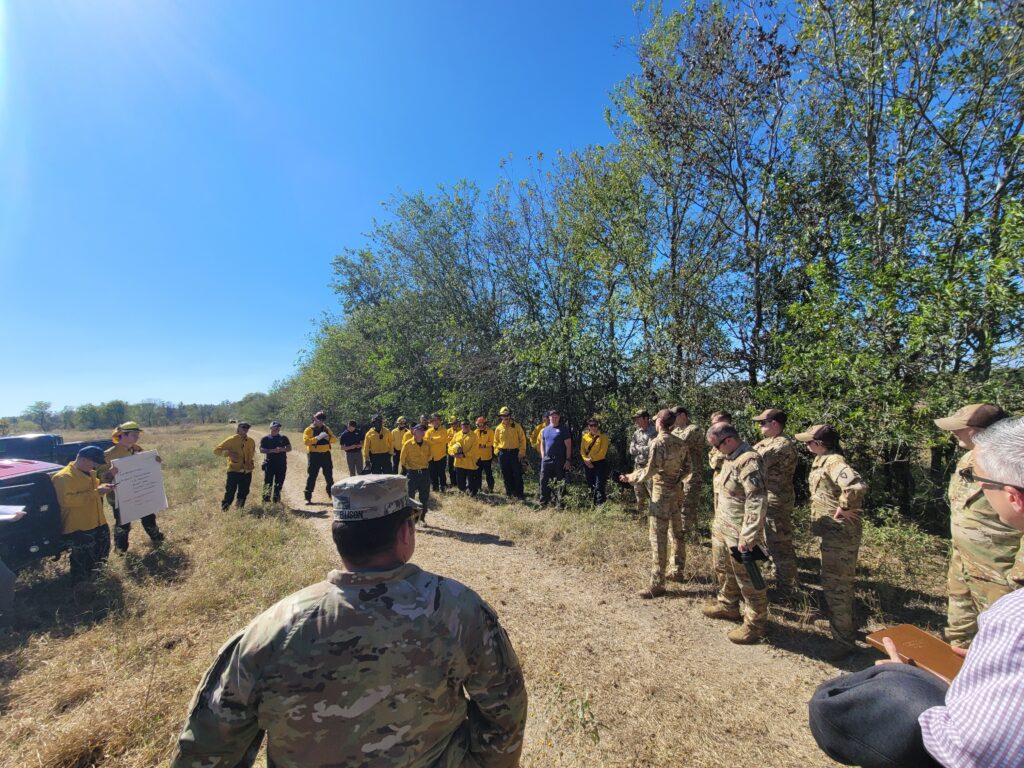
These sweeping structural changes underscore a growing convergence between the military’s operational needs and the civil-service capabilities being refined by the ALIAS Texas program. Recognizing this common ground, the U.S. Army has taken an active role in the initiative, utilizing the BCDC’s work as a critical dual-use evaluation pipeline, and providing resources to the program such as the UH-60 Black Hawks that make it possible.
Specifically, the Army is closely monitoring how the MATRIX system navigates contested environments. For military planners, low or zero visibility environments are a constant tactical hazard—whether caused by burning forests, blinding desert dust storms, brownouts in landing zones, or active battlefield obscurants. By taking an active role in the initiative, the Army is leveraging state-funded testing to accelerate its own automated contested logistics and CASEVAC doctrines, effectively letting civilian disaster-response testing pave the way for next-generation military innovation.
Progress to Come
As of the publication of this article, the ALIAS Texas program has just passed its one-year milestone, but the momentum has only continued.
Speaking on the past year, Principal Investigator of ALIAS Texas, John Diem stated “It has been a dynamic year as we worked to understand the technologies that had been offered to the state, the current challenges of providing aviation support to wildland fires, and the challenges imposed by introducing large-scale autonomy into those complex, chaotic environments. We have great partners, we are already making contributions, and we believe this is a mission – if done right – that will produce huge benefits.”
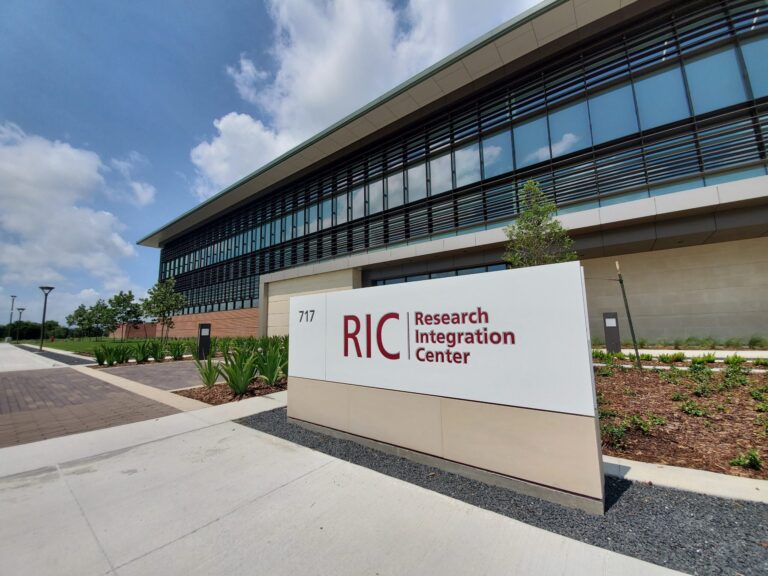
Nearing completion, the Engineering Systems Integration Lab (E-SIL) inside the BCDC Headquarters at the Research Integration Center will host software development, integration, and simulation. Also located on the RELLIS Campus, the ALIAS Texas team will soon be breaking ground on an advanced Aircraft Hanger and Hardware Systems Integration Lab (H-SIL). This new facility will allow the team to begin hosting aircraft and mission control systems, while tying physical hardware, such as the OPV, into the simulation space.
The team plans to make extensive use of the SIL capabilities to develop instrumentation, diagnostics, and to loop hardware and software into the testing environment. Plans call for the first OPV to arrive in June 2028, equipped with firefighting systems, and the first mission autonomy kit to support wildfire sensing and attack capabilities.
Min Viable Product Demo and Products Available for 2027 Fire Season
The same momentum is also found in the testing schedule, with six more tests planned for this year, mostly focused on testing software and programs. Systems such as fire modeling and attack software, command, control, and communications system, and airspace management software will be evaluated throughout the summer and fall, culminating in a Minimum Viable Product test taking place on the RELLIS Campus. Throughout this testing, the ALIAS Texas team will continue to collaborate with partners to collect feedback and evaluate test data.
Conclusion
The future of the ALIAS Texas initiative represents a paradigm shift in disaster response and autonomous aviation. As the threats posed by wildland fires grow more severe and unpredictable each season, the State of Texas, the Texas A&M University System, and the Bush Combat Development Complex are actively rising to meet the challenge. By anchoring innovative defense technology into a practical, civil-service mission, this vast network of partners is leading a national charge. The breakthroughs engineered at the RELLIS Campus will fundamentally redefine the front lines of emergency response, providing modern firefighters with autonomous tools, synchronized intelligence, and unmatched safety margins required to face the increasingly complex crises of the 21st century.